Last Updated on July 13, 2026 by David
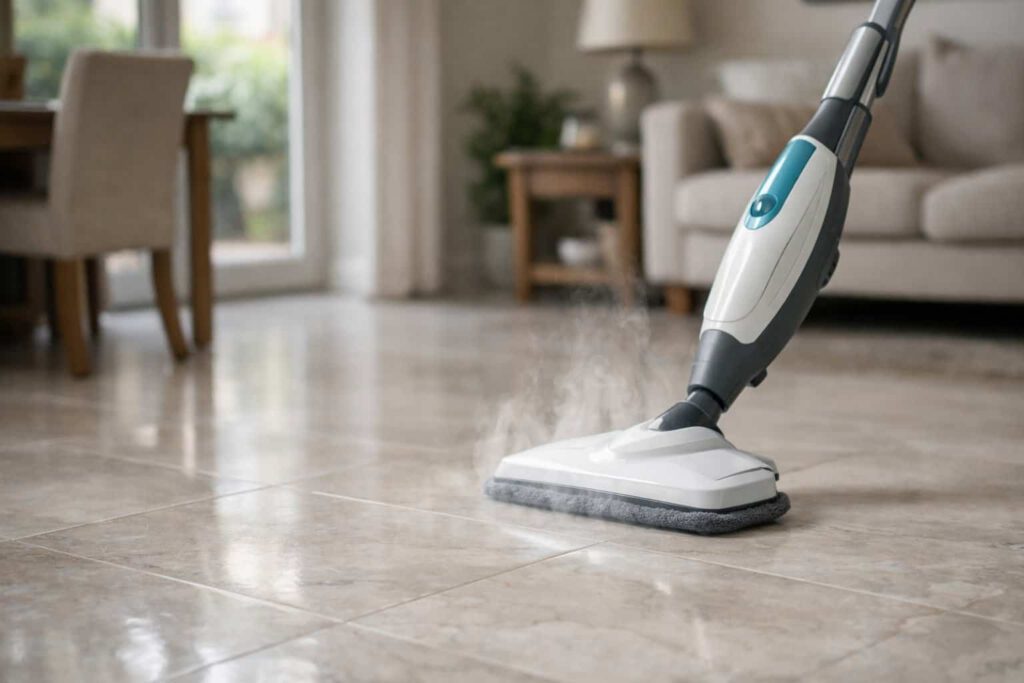
To maintain the beauty of travertine floors, it is vital to utilise controlled damp cleaning methods instead of steam cleaning. This approach is especially crucial if your floor has open holes, loose filler, a compromised sealer, alkaline residues, or dark stains embedded in its porous surface. Using a pH-neutral cleaner, thoroughly rinsing with clean water, and ensuring effective recovery will help protect the floor’s finish. If regular mopping does not remove stubborn dirt, it may be time to seek assistance from a professional hot water extraction service.
Is It Safe to Steam Clean Travertine Floors?
If your travertine has open pits, loose filler, or an uneven, sticky sealer, steam mopping could worsen these issues instead of providing an effective clean. Carefully inspect the entire floor before applying heat or moisture. Focus on high-traffic areas, grout lines, kitchen workspaces, and the edges of visible holes.
Dark spots in natural crevices usually indicate that dirt or cleaning residues have settled in the pits due to frequent mopping. While adjacent tiles may seem clean, these pits can remain dark, leading to a speckled or consistently dirty look. Avoid steam cleaning these areas, as traditional mopping cannot sufficiently recover loose debris from within the holes.
If you notice grey or black staining along recessed grout lines, check if the discolouration is evenly spread or concentrated around the pits. Repeated mopping can inadvertently push dirty liquid into these lower areas, where it dries after the cleaner evaporates. For further information, you can refer to examples of why travertine grout turns black. Dark grout that persists despite controlled cleaning should not undergo repeated steam treatments.
The appearance of new holes in an otherwise smooth floor does not necessarily signify deterioration of the stone. Begin by examining the edges. A firm, rounded edge usually indicates a natural cavity exposed through normal wear, while crumbly material within the opening may suggest failing factory filler. For advice on safely filling small travertine holes, it is essential to determine when a localized pit requires attention. Loose or crumbling filler clearly indicates that steam cleaning should be avoided.
If the beige filler is protruding from the tile or crumbling at the edges, gently run your fingertip across it without disturbing the surface. Any movement or loose particles indicate instability in the filler, making it unsuitable for routine cleaning with heat and a wet pad until it has been properly assessed.
Variations in the glossy finish—where one section appears shiny while another looks flat—often signify uneven wear of the protective coating. High-traffic areas typically lose their finish more quickly than the protected edges, as shoes, dirt, and frequent cleaning wear down the busiest sections first. Using a steam mop on these varying conditions can exacerbate the patchy finish.
Cloudy patches that seem clear when wet but revert to cloudy once the floor dries may not solely be due to dirt. This issue can arise from dried cleaning products, mineral deposits from hard water prevalent in the UK, or changes to an existing surface coating. Conduct a test patch using a properly diluted, stone-safe product instead of steaming the entire area.
Rough, pale spots near sinks, dining tables, or food preparation areas may indicate exposure to substances like wine or unsuitable household cleaners. These stains usually do not feel sticky and cannot be removed with water. Once the surface has changed, cleaning cannot reverse it; thus, steam cleaning will not eliminate the stain.
Fine scratches around entrances or along the main kitchen pathway should lead you to check for loose grit around doorways and beneath mats. Surface scratches often become more visible after wet cleaning due to light reflecting off the damaged areas. Additional passes with a mop that contains dust or grit can create further lines, regardless of the cleaning product used.
When scratches are only noticeable in the busiest areas, compare these with tiles protected beneath furniture or those located near the edges. A clear contrast between these zones indicates surface wear rather than soil that can be removed with a stronger cleaner. The travertine cleaning work in Abbots Bromley illustrates the importance of assessing the floor’s condition before choosing a cleaning method. Avoid steam cleaning visibly scratched traffic lanes.
Yellowing, streaks, or darker bands that seem to sit above the stone’s natural hue may result from an old surface coating or a buildup of maintenance products. These areas can feel slightly tacky beneath a clean, dry cloth, particularly where layers overlap. Steam should not be applied to soften or remove an unidentified coating, as partial removal will create an uneven finish.
A clean-looking centre with darker edges around grout joints often indicates that dirty solution has settled in the lowest points. This occurs when a round mop repeatedly pushes slurry away from the centre of the tile without recovering it. A deep-cleaned travertine floor in Hull exemplifies the difference between mere surface wiping and complete contamination removal. Do not steam clean where dark borders remain after standard mopping.
Open pits often appear darker when wet, so ensure the floor is completely dry before assessing whether soil remains. Water temporarily darkens the colour of grout, filler, and unfilled holes, which makes immediate post-mopping inspection unreliable. Persistent dark spots on a fully dry floor indicate contamination that requires recovery rather than another damp pass.
Black deposits deep within larger cavities should only be inspected with a soft-bristled brush and a small amount of diluted pH-neutral cleaner. Avoid using metal tools, abrasive pads, or sharp edges on the recesses. The purpose of the inspection is to determine whether the deposit loosens easily or remains compacted.
If dirt transfers to the brush but accumulates again around the hole, conventional cleaning merely relocates the contamination without removing it. This illustrates the limitations of a mop on a pitted surface: it can loosen surface soil but lacks a separate recovery stage. A heated pad presents the same limitation, so do not steam clean.
Grey water trailing in front of the mop head indicates that the microfiber material needs rinsing or replacement. Once loaded, the pad becomes ineffective at lifting dirt and instead pushes slurry into grout recesses and around the edges of voids. Continue cleaning only when the working face is clean enough to collect fresh soil.
Foam or cleaner streaks left behind after drying usually suggest that the previous solution was either too concentrated or inadequately rinsed. The appropriate response is a controlled clean-water rinse followed by immediate recovery using fresh absorbent material. Applying steam over dried product will not compensate for incomplete rinsing.
White deposits around pits or grout lines may be mineral residue left behind as hard water droplets evaporate. Avoid vinegar or acidic limescale removers, even if the product label claims to be natural. Test a non-acidic, stone-specific formulation in an inconspicuous area before applying treatment to the wider floor.
Fading or loss of sheen in areas where a steam mop has frequently paused may indicate that concentrated heat or excess moisture has adversely affected the existing finish. Cease using steam instead of increasing the number or duration of passes.
Even if there are no visible holes and the floor is factory-filled and honed, inspect it under bright overhead light. Small filler losses, hairline pits, and dull traffic bands are often easier to spot from a low angle than directly above. A floor that appears smooth is not automatically suitable for steam cleaning.
Tumbled or deliberately textured travertine will retain natural cavities and matte recesses after cleaning. These features are integral to the stone’s geological character and not indicators of damage. Examples of cleaning tumbled travertine in Kings Lynn illustrate the goal of preserving the texture rather than erasing it. Steam cleaning remains unsuitable since an open surface makes recovering dirty solution even more critical.
When the filler is intact and the dry floor exhibits consistent colour and an even finish, routine cleaning can proceed without steam. Start by removing loose dirt, then use a damp microfiber mop along with an acid-free pH-neutral cleaner. Ensure recovery of the dirty liquid instead of allowing it to dry, and stop immediately if the pad begins to drag or the cleaning water turns grey.
If multiple warning signs appear simultaneously—such as a tacky coating, loose filler, dark holes, and persistent residues—a thorough assessment is essential rather than mere experimentation with stronger household chemicals. Evaluate the various conditions to distinguish cleanable contamination from worn protection or physical surface damage. Professional examples like cleaning a heavily soiled travertine floor in Selby illustrate how the condition dictates subsequent actions. Avoid steam cleaning until that distinction is established.
The safest approach is straightforward. A domestic steam mop is unsuitable for maintaining travertine floors, even if they appear intact. It merely loosens soil and transfers moisture across the tiles without effectively recovering dirty solution from natural holes, grout recesses, or the pitted surface. Implement controlled damp cleaning for regular maintenance and seek professional extraction when entrenched soiling persists.
What Causes Damage to Travertine Floors?
When steam heat causes a sealer to feel soft or slightly tacky under a clean cloth, it indicates that the protective film is already being compromised. Grit trapped beneath the mop pad can scratch the stone during cleaning. Heat, chemicals, and abrasion can all lead to damage, but each does so in a unique way, making the floor increasingly difficult to clean.
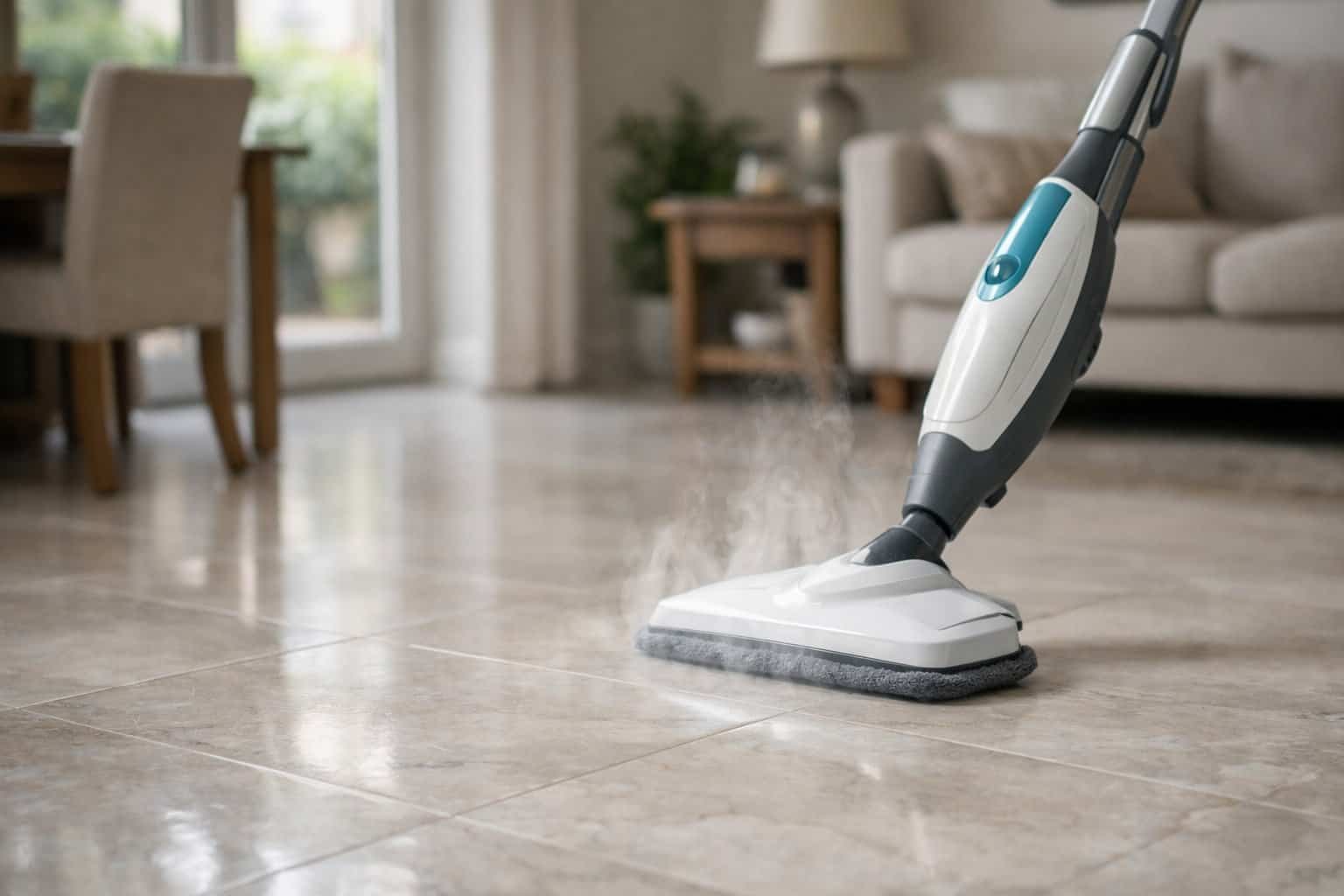
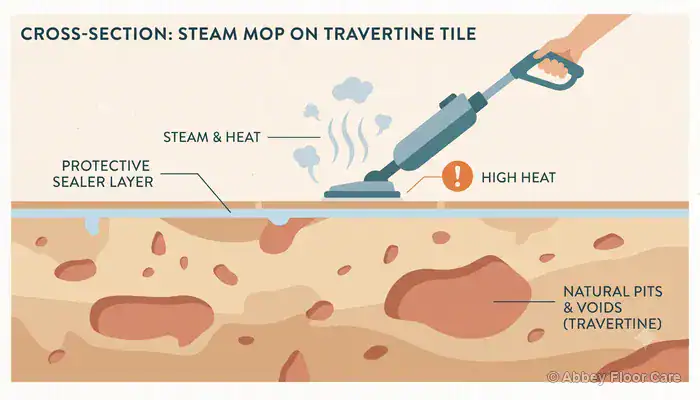
Concentrated steam can weaken a film-forming sealer, reducing its bond with the tile. Excess moisture may linger beneath the damp mop or seep into open holes, carrying loosened contaminants toward grout lines instead of removing them. An invisible penetrating treatment may also begin to deteriorate when exposed to prolonged heat and cleaning residues.
Steam loosens contaminants but does not extract them from the natural voids of travertine.
Harsh household chemicals, like chlorine bleach, can cause discolouration, surface deterioration, and degradation of sealants. Travertine’s acid-sensitive calcite composition means that products such as vinegar, acidic bathroom cleaners, and acidic limescale removers can dissolve the finished surface, resulting in pale, rough patches. Always use a stone-specific cleaner and follow up with rinsing using clean water and a soft cloth.
Loose dirt under a mop pad can create physical scratches as the mop moves across the floor. Begin by vacuuming with an appropriate attachment or using a soft-bristled brush to remove grit. Ensure that the microfiber mop is free from dust and debris. This preparation helps to minimise surface wear caused by everyday foot traffic.
Essential Tools for Effective Travertine Cleaning
A clean mop head that glides effortlessly is far more crucial than opting for a more powerful cleaning solution. Once the pad begins to drag gritty slurry across the tile, it ceases to function effectively. Maintain a clear distinction between washing and recovery stages, allowing loosened soil to exit the floor instead of being redistributed.
Effectively Removing Loose Dirt
When loose dirt is visible around entrances or grout joints, it should be removed with a soft-head vacuum or a soft-bristled brush before introducing water. This method is efficient when routine dust and grit can be lifted without the need for a wet mop.
Implementing Controlled Damp Cleaning Techniques
For light general soiling, use warm water, a pH-neutral stone cleaner, and a clean microfiber mop. Follow the manufacturer’s dilution instructions and work in small sections to prevent the product from drying on the tile. This method works well when the floor is intact and visible holes do not contain heavy contamination.

Recovering Contaminated Solution
When the cleaning water turns grey, recover it using fresh absorbent microfiber material rather than continuing with a loaded mop. Any deeper cleaning solution must be followed by a clean-water rinse, and the rinse liquid must also be removed. This step is crucial when residue or streaks persist after the initial controlled cleaning pass.
Engaging Professional Extraction Services
Dark soil trapped in natural holes will not be effectively removed by stronger DIY cleaning products. Professional equipment combines controlled hot water, agitation, and immediate slurry removal, effectively lifting deep contaminants without redistributing them. This is the recommended approach when embedded soiling remains after a safe test clean.
What Outcomes Can You Expect After Properly Cleaning Your Travertine Floor?
A properly cleaned travertine floor should feel clean and dry to the touch, free from sticky drag, gritty residue, or dark slurry lingering in visible holes. Conduct the final inspection only after the floor has completely dried, as damp grout and wet pits can temporarily appear darker.
Clean result: The colour should appear consistent across similar tiles, the grout lines distinctly defined, and the mop should no longer collect grey residue. Natural cavities remain visible as they are a characteristic feature of the stone, but their edges should be free from loose soil and dried cleaning products.
Residue remaining: If the dry surface feels tacky or shows streaks where cleaner has been left behind, it indicates the need for a clean-water rinse followed by a separate recovery pass. Un-rinsed alkaline residue can weaken the protective layer and lead to accelerated dullness.
Conditioning cleaning cannot rectify: pale, rough areas indicate changes to the finished surface rather than dirt. Scratches, worn filler, and a patchy coating will also be noticeable once contamination has been removed. These conditions require different interventions and should not be addressed through repeated mopping.
Embedded contamination: Dark spots lingering in open holes after the surrounding tiles have dried indicate that routine cleaning has reached its limits. Professional hot water extraction is necessary to penetrate voids and provide immediate slurry removal, resulting in a significantly cleaner floor that is easier to maintain compared to repeated incomplete washing.
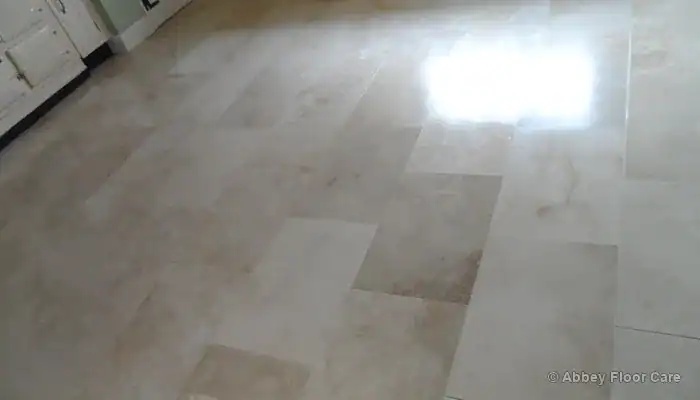
A honed and filled travertine floor should display a smooth, consistent satin surface, while unfilled or tumbled travertine retains visible voids. These may be filled or left open, but even when enhanced, the voids should remain visually matte against the surrounding surface.
Best Practices for Maintaining Travertine Floors
When repeated damp cleaning leaves the tile feeling slightly tacky underfoot, the usual cause is excessive product use or inadequate recovery—not a need for a stronger solution. Regularly remove grit, address spills immediately, and use an acid-free pH-neutral cleaner with the mop only damp enough to loosen surface soil.
Rinse or replace the microfiber material as soon as the recovered water turns visibly grey. Continuing with a loaded mop pushes abrasive grit and slurry back into void edges and grout lines. Allowing alkaline cleaner to dry can shorten the lifespan of the sealer.
Regularly inspect open holes and older filler to promptly address localized contamination or crumbling material before it disrupts everyday cleaning. Ongoing maintenance focused on grit removal, controlled damp mopping, and timely resealing is essential for extending the floor’s lifespan. The complete travertine flooring care guide outlines cleaning, repair, sealing, and restoration as distinct stages. A maintenance routine tailored to the finish will keep the floor cleaner and minimise unnecessary interventions.
Recommended Products for Optimal Care of Travertine Floors
Essential Cleaning Tools for Travertine Maintenance

David Allen — Abbey Floor Care
David Allen brings over 30 years of expertise with Abbey Floor Care, specialising in assessing and restoring travertine floors throughout the UK. His knowledge encompasses identifying when controlled pH-neutral cleaning is appropriate, recognising when to avoid steam cleaning, and determining when entrenched contaminants necessitate professional extraction.
The Article Can You Steam Clean Travertine Floors? first appeared on https://www.abbeyfloorcare.co.uk
The Article Steam Cleaning Travertine Floors: Is It Safe? appeared first on https://fabritec.org
The Article Is Steam Cleaning Safe for Travertine Floors? Was Found On https://limitsofstrategy.com
References:
Https://limitsofstrategy.com/is-steam-cleaning-safe-for-travertine-floors/