Last Updated on June 1, 2026 by David
Recognising the Deteriorated Condition of a Historically Significant Floor
Initial Findings on the Victorian Hallway Floor
A thorough examination of the Victorian tile floor in Tutbury unveiled a starkly flat and lifeless surface, even though its structural integrity remained intact. The homeowner expressed frustration, as routine cleaning efforts yielded minimal results, leaving the hallway feeling perpetually uninviting and dull, despite frequent scrubbing.
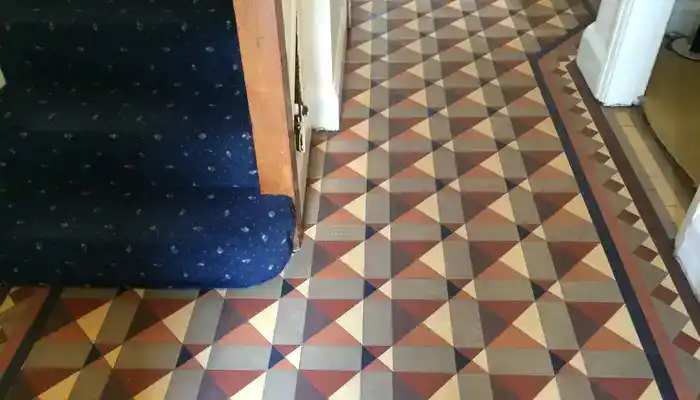
This entrance floor held considerable significance within the property, showcasing the charm typical of many period homes in Staffordshire. It retained its original geometric design, with contrasting colours arranged in a decorative pattern characteristic of early twentieth-century installations. Unfortunately, layers of accumulated grime obscured much of its former visual appeal.
The most striking problem was the muted colour contrast. Areas that should have highlighted the distinctive differences between individual tiles appeared washed out and indistinct. The floor lacked dimensionality; the patterns felt visually compressed, and large sections adopted a greyish hue, devoid of their original vibrant colours.
It became clear that surface dirt alone could not account for this uninspiring appearance. Previous cleaning attempts had effectively tackled everyday grime, yet the floor still exhibited a fatigued appearance. The homeowner noted that sections cleaned recently appeared slightly improved while damp, only to revert to a dull state once dried.
Traffic patterns, especially prominent in the middle of the hallway, starkly illustrated years of foot traffic. Decades of wear had darkened specific patches, leading to uneven areas that detracted from the floor’s original aesthetic. Despite regular upkeep, the floor conveyed an undeniable sense of neglect.
The Rich Historical Context of the Hallway Floor
This floor had graced the property for approximately eighty years, undergoing numerous ownership changes. Over the decades, the home experienced typical cycles of decoration, evolving styles, and various cleaning practices, each leaving subtle marks on the surface.
While many floors of this age often remain hidden beneath carpets or other coverings, this installation had largely remained exposed. It was evident that a variety of maintenance products had been applied over the years. These treatments influenced dirt accumulation and contributed to the increasingly patchy appearance observed by the homeowner.
The geometric design was remarkably well-preserved. Borders remained intact, and the primary pattern was clearly visible without significant material loss. This scenario presented a common challenge for restoration. The floor appeared far older than its actual condition warranted.
Original fired clay flooring often appears aged long before it structurally deteriorates. Contaminants embed themselves within the surface, and older maintenance products attract airborne dirt, altering the overall appearance. The floor seems worn out, even though the underlying installation remains fundamentally sound.
The hallway bore the marks of a lively family home. Years of wet shoes, tracked-in dirt, dust, and daily household activities gradually transformed the visual character of the surface. These changes occurred so subtly over time that the homeowner struggled to pinpoint when the decline began.
Evaluating the Floor’s Condition Prior to Restoration
Before the cleaning process commenced, the floor exhibited various layers of deterioration. Dark patches disrupted the pattern, colours lacked vibrancy, and the surface appeared uneven across different sections of the hallway.
Some areas appeared significantly darker than neighbouring tiles, despite being composed of the same materials. Other sections exhibited a cloudy appearance, diminishing the clarity of the geometric design. Collectively, these issues contributed to the perception that the floor had reached the end of its useful life.
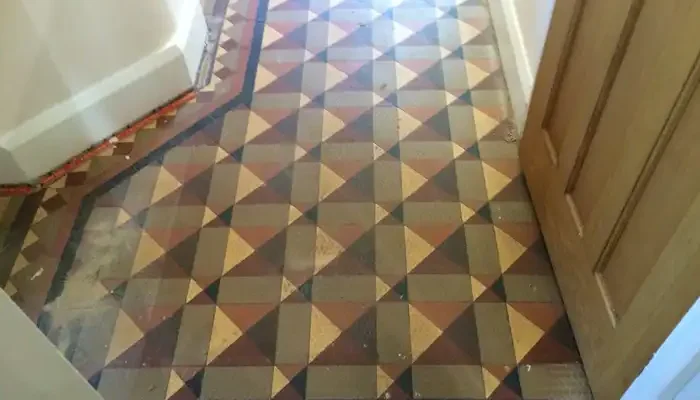
Upon closer inspection, it became evident that the floor was stable underfoot. There were no significant areas of movement, lifting, or indications that major reconstruction was necessary. The observed issues were primarily cosmetic rather than structural.
The homeowner’s objective was clear: restore the floor’s original character without making it look artificially overhauled. Preserving authenticity was just as crucial as enhancing visual appeal.
The defining characteristic of the floor at this stage was its visual flatness. Decorative details remained, but they were difficult to appreciate. The colours were concealed beneath layers of contamination, failing to contribute meaningfully to the overall aesthetic of the hallway.
The project began with a floor that appeared much older than its true condition suggested. Understanding the homeowner’s perspective and identifying the reasons why the floor seemed so different from its original state was vital before any diagnosis, treatment decisions, or cleaning strategies could be formulated.
What Causes Persistent Dirt Despite Previous Cleaning Attempts?
The stubborn dirt that reappeared after cleaning typically resides beneath the surface layer. In this hallway, years of embedded soil, residues from old coatings, and remnants of historical contaminants had settled within the absorbent clay structure, rather than lingering on the surface where standard cleaning methods could effectively address them.
Deep-seated residues persist despite standard cleaning methods as contaminants become trapped within the floor and gradually resurface as the surface dries.
The floor’s porous nature allowed moisture to carry dirt, adhesive residues, and aged surface treatments deep below the visible tiles. The older, permeable construction meant that moisture could naturally flow through the floor, gradually drawing contaminants back toward the surface over time. This created a cycle where the floor initially appeared cleaner, only for underlying contamination to resurface as it dried. A similar issue was noted in this Victorian tile cleaning project in Derby, where visible cleaning failures were actually due to deeper contamination remaining in the floor.
Why Is It More Effective to Use Multiple Gentle Cleaning Passes Rather Than One Aggressive Treatment?
Repeatedly applying harsh cleaning methods to historic Victorian tiles often poses more risks than benefits. In Tutbury, the goal was to gradually eliminate contamination rather than attempting to strip away decades of residue in one aggressive operation.
Aggressive cleaning would have prioritised speed. Strong mechanical action, excessive water, or harsh abrasion could have damaged delicate surface areas while failing to effectively manage moisture levels within the floor structure.
Controlled multi-pass cleaning enabled residues to be softened, loosened, and progressively extracted. Solvent treatments targeted stubborn contamination, while repeated cleaning cycles lifted dirt in stages. Dirty cleaning slurry was removed after each phase, ensuring that contamination left the floor instead of being redistributed across the surface.
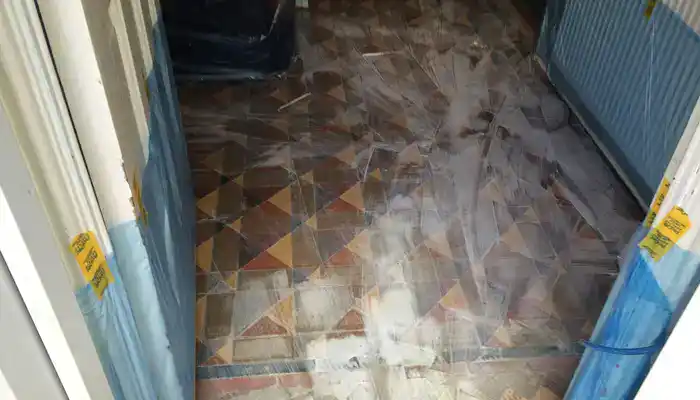
Moisture management guided every decision throughout the process. Safely removing contamination was far more critical than finishing the work quickly, especially on an older floor where excessive water could introduce unnecessary risks.
How Were the Original Colours Revived Without Creating an Artificial Appearance?
The restoration of colour on historic Victorian tiles often appears genuine rather than overstated. Once the accumulated contamination was removed, the most significant transformation was the reawakening of visual definition across the geometric pattern.
Before cleaning, the colours seemed compressed and muted. Decorative contrasts were difficult to distinguish, and much of the pattern merged into an overall dull backdrop.
<a href="https://homerenonews.com.au/victorian-tiles-in-a-derby-hallway-maintenance-challenges/">After cleaning</a>, the original tones resurfaced. Borders became clearer, colour differences regained definition, and the layout once again contributed to the hallway’s character without appearing artificially refreshed.
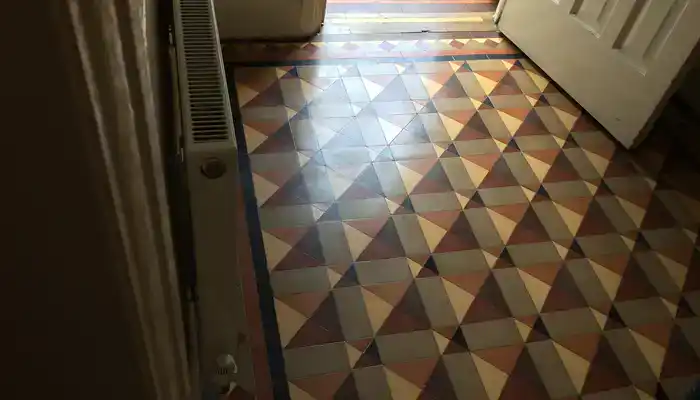
A restored Victorian tile floor showcases the original fired matte surface with consistent colour and pattern, while a suitably applied topical sealant provides a slight protective sheen without altering the period character. The completed floor retained its age, history, and natural wear, presenting a cleaner and more coherent appearance.
Where Can You Access Comprehensive Resources for Maintaining Historic Victorian Tile Floors?
Effective care for Victorian tiles relies on understanding the accumulation of contamination. This project demonstrated that visible wear, colour loss, and recurrent dullness often stem from accumulated residues rather than irreversible damage.
Historic clay floors require cleaning methods that respect natural moisture movement. Older installations often behave differently from modern floors, meaning that excessive water, unsuitable coatings, and inappropriate maintenance products can create additional problems instead of resolving existing issues.
Long-term success hinges on finding a balance between cleanliness, protection, and breathability. Readers seeking broader guidance on maintenance, contamination management, and conservation-focused care can explore the main Victorian tile cleaning resource hub, which delves into related projects and maintenance considerations in greater detail.

David Allen — Abbey Floor Care
With over 30 years of experience in restoring Victorian tile floors across the UK through Abbey Floor Care, David Allen has successfully managed numerous projects in Tutbury, Staffordshire. This case study documents a genuine restoration visit where on-site evaluation informed every decision. His focus lies in accurate diagnosis, sensitive repair, and preserving the original character of period flooring.
The article Victorian Tile Cleaning Revealed: What Dirt Was Hiding first appeared on https://www.abbeyfloorcare.co.uk
The Article Victorian Tile Cleaning: Uncovering Hidden Dirt Secrets appeared first on https://fabritec.org
The Article Victorian Tile Cleaning Secrets to Reveal Hidden Dirt Was Found On https://limitsofstrategy.com