
Last Updated on May 2, 2026 by David
Identify the causes for the dull, streaky, or dirty appearance of porcelain tiles after cleaning
Even after rigorous cleaning efforts, if your porcelain tiles still look dull or smudged, the problem often lies in issues related to the grout, surface residue, or how light interacts with the finish rather than a failure of the tiles themselves. Recognising this distinction is crucial, as the floor functions as a complex system composed of tile surfaces, grout joints, and various textures, alongside cleaning residues and installation films. Each of these factors significantly influences the overall aesthetic of your tiles. Accurately identifying the underlying problem is essential for restoring the pristine appearance of your flooring and ensuring it looks its best.

How Does Grout Darkening Change The Whole Floor’s Appearance?
If your porcelain floor appears dirty around every grout joint, the grout is likely the culprit. Cement-based grout naturally possesses a porous structure, which means it easily absorbs dirty water, grease, detergent residues, and rinse slurry. As a result, the grout joints tend to darken first, creating a visual outline that highlights each tile. This visual grid can significantly influence perception. Even tiles that are genuinely clean may appear tired or dirty when surrounded by darkened grout lines, making the entire installation seem unclean due to stark contrasts.
Moreover, mopping can worsen this issue, as dirty water spreads into the joints, where it dries and accumulates over time. When the grout is structurally sound but visually unappealing, the solution lies in addressing the grout issues rather than the tiles themselves. The porcelain grout restoration case study illustrates the significant impact of this dilemma. Always remember that the tiles can be clean, yet the floor may still appear dirty due to grout problems.
How Do Residue Films Create Streaks On Dense Tile Faces?
If you notice cloudy streaks after the tiles have dried, it often indicates a surface film rather than actual dirt. Detergent residue, hard water minerals, diluted grease, or remnants of cleaning products can dry into a thin layer that disrupts light reflection. This issue is particularly pronounced on smooth and polished porcelain surfaces, where even the slightest film becomes evident under side lighting. While the floor may feel completely clean underfoot, it can still appear smeary, a common challenge in kitchens and bathrooms.
Using more cleaner does not solve this issue; in fact, it can often exacerbate it. Residue tends to build up layer upon layer unless it is properly removed, highlighting the importance of selecting the right cleaning products and ensuring thorough rinsing. For additional insights on this topic, refer to modern cleaner safety for porcelain tiles. Ongoing maintenance strategies, including the use of pH-neutral cleaning agents, efficient grit removal, and optimal timing for protective measures, are essential for maintaining your floor’s appearance.
How Can Installation Haze Make New Porcelain Look Permanently Cloudy?
If a new floor consistently looks unclean, the problem often arises from installation haze that remains on the surface. Polymer-modified grout residues can leave a cloudy or slightly matte film, particularly on darker tiles. This issue is classified as a defect because fine cement particles and polymer binders linger on the surface post-grouting. What you see is a persistent haze that behaves differently from ordinary dirt.
The key takeaway is that the tile has not absorbed anything; rather, the film sits atop the surface. This film hardens and traps additional contamination during routine cleaning, contributing to ongoing visual problems.
How Does Factory Finish Control How Porcelain Shows The Same Dirt?
Interestingly, two floors that undergo identical cleaning processes can yield entirely different appearances. This discrepancy primarily arises from the finish applied to the tiles.
Matt porcelain frequently shows drag marks with a flat grey cast, while textured porcelain can trap soil in shallow recesses. In contrast, polished porcelain tends to highlight streaks and reduced clarity because reflection is a fundamental aspect of its design.
Furthermore, glazed surfaces require careful handling; the use of abrasive pads can permanently damage them. Once that surface layer is compromised, the resulting change transitions from merely dirt to an irreversible alteration.
How Is Polished Porcelain Dullness Different From Dirt?
If polished porcelain appears dull in high-traffic areas, it may not be due to contamination at all. Fine abrasions caused by grit and daily foot traffic can reduce clarity, leading to uneven light reflection. This scenario illustrates the limitations of cleaning efforts.
Porcelain burnishing refers to the process of controlled clarity enhancement on suitable polished surfaces. While not all finishes can undergo this treatment, it clarifies why some floors can remain dull even after extensive cleaning.
How Do Sealer Mistakes Add Another Layer To The Diagnosis?
If your porcelain tiles seem sticky, cloudy, or quickly become soiled again after sealing, the surface may be retaining a product that should not be present. Dense porcelain typically does not absorb sealers; instead, these products rest on the surface.
This creates a film that attracts soil and debris. While porous grout can benefit from sealing, it does not imply that sealing is universally advisable for porcelain tiles.
If you notice tackiness, patchy shine, or inconsistent dullness following sealing, it is likely that the product is accumulating on the surface. In such cases, safe porcelain sealer stripping guidance is recommended, as tile and grout behave differently and require tailored approaches.
Discover why dirt seems to penetrate porcelain tiles
Contrary to common beliefs, porcelain does not absorb dirt in the way most people assume. Its fired body is exceptionally dense and vitrified, enabling it to resist absorption significantly more than the surrounding grout. The confusion typically arises from the various components that make up a floor, including grout, texture, residue films, and installation materials; it is not solely about the tiles themselves.
When a porcelain floor appears stained, the mark usually rests on the surface, is caught in the texture, held by grout, or trapped within a film lying above the tile. Understanding this is key to effectively addressing any issues that arise.
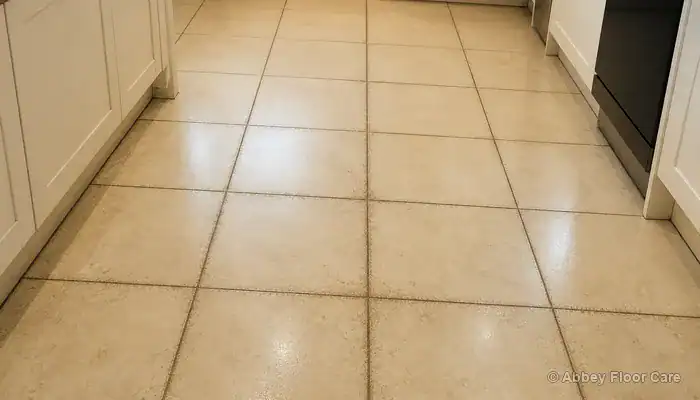
Explore why certain smooth porcelain tiles retain dirt
Some porcelain surfaces can hold residue within their microscopic texture, even when they feel smooth to the touch. This texture can trap fine soil, cleaning residues, and mineral deposits, leading to a persistently dull appearance.
Smooth-feeling porcelain can still retain residue in microscopic surface channels.
This explains why a tile may feel clean yet still appear dull from specific angles. The issue is not a thick layer of dirt; rather, it is light scattering caused by very fine contamination that is not easily visible. True micro-porous porcelain is rare, but it does exist, and you can recognise it by the persistent darkening that occurs rapidly after cleaning.
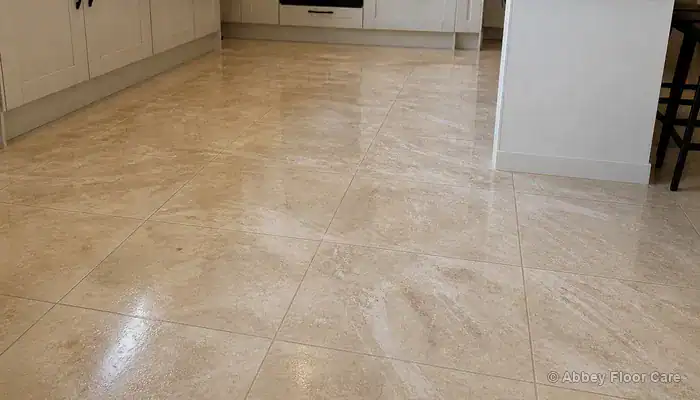
Understand the differences in results among various types of porcelain floors
The behaviour of various finishes differs significantly, which can explain why two porcelain floors cleaned in the same way can yield completely different results.
Matt porcelain tends to show drag marks and uneven drying, which can make benign residues appear as ingrained dirt.
Textured porcelain tends to trap soil beneath the surface level. While a mop may clean the high points, it often leaves contamination trapped below.
Polished porcelain emphasises every flaw—streaks, fine scuffs, and diminished clarity. Since reflection is a fundamental aspect of this finish, even minor changes become readily apparent.
Thus, despite using the same cleaning method, the results can vary dramatically based on the tile’s finish.
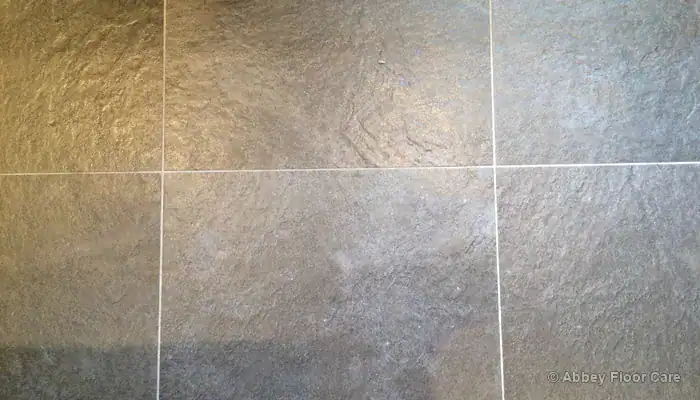
Examine the reasons why dirt spreads or reappears on your porcelain floor
If your porcelain tiles appear clean in some areas but grey in others, it indicates that contamination is moving through the system. Elements such as grout, texture, and residue films all contribute to this phenomenon.
Typically, grout acts as the weak point, absorbing what the tile effectively rejects.
Textured surfaces present another area where soil can accumulate. Dirt is dragged across the surface, then settles into low points where mopping fails to completely remove it, leading to uneven appearances.
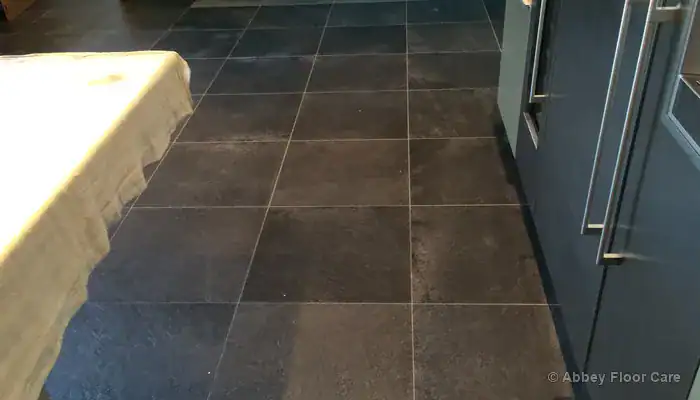
Discover how mopping can negatively impact the appearance of your tiles
Repeated mopping can lead to a floor that appears worse rather than better when the process redistributes contamination instead of effectively removing it. The mechanism is quite straightforward: the mop lifts light soil, mixes it with cleaner, spreads it across the surface, pushes it into the grout and texture, and subsequently leaves behind a thin film as it dries.
Over time, this film accumulates, resulting in further visual deterioration.
Mopping often redistributes residue instead of eliminating it from the floor.
Using heavy detergents and washing-up liquids can exacerbate this issue by leaving behind sticky residues. When cleaner selection is problematic, porcelain cleaner and finish safety explains the chemistry involved. If performed correctly, maintenance should aim to reduce residue rather than layer it.

Identify the effects of sealer film on porcelain tiles
Applying a sealer to dense porcelain often creates complications, as the product cannot be absorbed and instead remains on the surface. This results in the formation of a film that attracts soil and debris.
In contrast, grout remains porous and can genuinely benefit from a protective seal, but this does not imply that sealing is a one-size-fits-all solution for porcelain tiles.
If you notice tackiness, cloudy patches, or rapid re-soiling after applying a sealer, the problem is likely due to product accumulation on the surface. In such cases, porcelain tile resealing guidance can assist in determining which products are suitable for grout and what should never be applied to the tile.
Understand the causes behind persistent haze, dullness, and uneven colour
These problems tend to recur when the visible symptoms are treated without addressing the underlying layers. Grout haze results from installation residues, while residue films originate from cleaning processes. Patchy colour often stems from the condition of the grout rather than the tiles themselves.
It is crucial to differentiate between these factors before attempting any correction.
Traffic dulling on polished porcelain represents another element to consider; this is a physical change that cannot be removed like ordinary dirt.
In cases where grout colour is inconsistent but structurally sound, a resin-based colour treatment can restore visual appeal. The porcelain grout colour restoration evidence demonstrates the significant difference this can make.
Explore why your floors never seem to maintain cleanliness
If your porcelain tiles look clean after mopping but appear dull again the next day, it indicates that the underlying issue has not been resolved. What you are witnessing is likely a cycle of residue, grout contamination, or texture retaining soil beneath the surface.
Grit plays a significant role in this scenario as well. On smooth finishes, it contributes to fine dulling over time. When combined with residue films, it accelerates the problem.
If this pattern continues, the issue has progressed beyond routine cleaning and necessitates a proper diagnosis to rectify it.
Understand why certain cleaning efforts fail to enhance the appearance
It is vital to recognise that cleaning has its limits. Once the issue transcends loose soil, further cleaning will not yield improved results.
Here are some useful criteria to consider:
- Streaks that appear only after drying indicate residue film.
- Darkening grout that quickly returns suggests absorption.
- Polished areas that remain dull indicate surface wear.
- Cloudiness present since installation points to haze.
At this point, the pertinent question is not how often you clean, but rather what you are genuinely observing on your floor.
Specialist porcelain restoration guidance outlines where cleaning concludes and corrective measures must begin.

Identify the next steps after diagnosing issues with your porcelain floor
The appropriate next step depends on the specific symptoms you are observing. Grout darkening, residue haze, sealer film, and polished dullness each require a different approach.
Addressing grout issues typically leads to restoration, while sealer film necessitates stripping and reassessment. Cleaning streaks indicate that maintenance needs correction, while surface dullness demands a finish-specific evaluation.
Structural problems require separate consideration. Cracked joints, loose tiles, and chipped edges signal movement or impact, rather than surface contamination. In such cases, porcelain tile repair guidance provides the necessary direction for appropriate action.
Align the symptom with the suitable corrective action. This alignment is crucial for maintaining clarity in diagnosis and treatment.

David Allen — Abbey Floor Care
With over 30 years of experience at Abbey Floor Care, David Allen specialises in porcelain, ceramic, and stone floors. He expertly diagnoses the reasons behind dull, streaky, or difficult-to-clean floors before recommending an appropriate treatment route. His methodology focuses on identifying finishes, understanding grout behaviour, and diagnosing residues, enabling homeowners to discern whether they are dealing with soil, haze, sealer film, grout deterioration, or surface dulling.
The Article Porcelain Tile Floor Never Looks Clean Enough first found on https://www.abbeyfloorcare.co.uk
The Article Porcelain Tile Floor: Achieving a Spotless Finish appeared first on https://fabritec.org
The Article Porcelain Tile Floor Cleaning for a Spotless Finish Was Found On https://limitsofstrategy.com